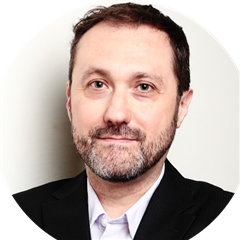
Roberto Gramignoli is working as an Associate Professor at Karolinska Institutet, and was recently appointed as Head of Unit for Cell Therapies at the Gaslini Hospital in Genoa (Italy). Roberto and his Mentor (Dr Strom) have always been on the front line for the treatment of acute and congenital liver disorders by cell-based therapies, with hepatocyte transplant as a bridge or an alternative to orthotopic liver transplantation. Working together, they became the first facility to be approved by the FDA to isolate and transplant human hepatocytes and performed clinical transplants both at Pittsburgh (PA-USA) and Karolinska. Due to the paucity of human hepatocytes, they investigated alternative sources, such as pluripotent or multipotent stem cells. Roberto focused his attention on perinatal cells, reporting the greatest results by transplantation of epithelial stem cells (AEC) isolated from the amnion membrane (human placenta).
Preclinical data suggest that, although not the patient’s own cells, AECs survive long-term and do not require immunosuppression. This is a paradigm shift for allogeneic cell transplantation, where the risk of side effects of immunosuppression is removed. Over the last years, Roberto’s group has accumulated evidence on the potential of AEC in several models of congenital diseases and as supporting therapy in fulminant hepatic failure. In support of the allogenic use of AEC without immunosuppression, Roberto’s group identified and described molecular pathways constitutively expressed by AEC which may lead to a new, unlimited source of allogeneic stem cells for regenerative medicine approaches. Based on safety and efficacy, in addition to AEC immunomodulatory and anti-inflammatory effects, he is in the process of starting phase I/IIa clinical trials for congenital and chronic disorders, not only liver-specific. Such advanced medical treatments will be granted by the first AEC stem cell bank, with the support of Tandem Biotherapeutics, a biotech company he founded.
Preclinical data suggest that, although not the patient’s own cells, AECs survive long-term and do not require immunosuppression. This is a paradigm shift for allogeneic cell transplantation, where the risk of side effects of immunosuppression is removed. Over the last years, Roberto’s group has accumulated evidence on the potential of AEC in several models of congenital diseases and as supporting therapy in fulminant hepatic failure. In support of the allogenic use of AEC without immunosuppression, Roberto’s group identified and described molecular pathways constitutively expressed by AEC which may lead to a new, unlimited source of allogeneic stem cells for regenerative medicine approaches. Based on safety and efficacy, in addition to AEC immunomodulatory and anti-inflammatory effects, he is in the process of starting phase I/IIa clinical trials for congenital and chronic disorders, not only liver-specific. Such advanced medical treatments will be granted by the first AEC stem cell bank, with the support of Tandem Biotherapeutics, a biotech company he founded.